Saturday, July 14, 2012
Colorized!
After doing many 5K events through the years, I will have to say that is was by far the most fun 5K I have ever done. The Color Run came to Omaha this morning and it was an experience! It's amazing how we all started out with white shirts, which is required, and at the end we were all colorized from head to toe! Even after a long shower, I still am blue, pink & purple! I am so doing it next year and I hope I can talk some friends into doing it also. If it's going to be in a city near you, I would highly suggest it. What a way to do something fun in the summer and in the 101 degree Nebraska weather! Have a great rest of the weekend everyone.
Sunday, July 8, 2012
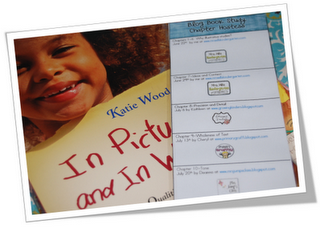
In Pictures and In Words - Chapter 8: Precision and Detail
I am so glad that I decided to become part of this wonderful book study because I am learning so much!
It has opened my eyes to many different things that I wouldn't of thought about in the process of writing and with my students. Thank you DeeDee from Mrs. Wills Kindergarten for hosting the first two sections of the study. Kathleen over at Growing Kinders is this weeks host and shares her thoughts and book picks for precision and detail. Chapter 8 was enjoyable and held a lot of information in how a reader and writer looks at the precision and detail in the pictures.
Here are the techniques that were explained:
13. Crafting Details of Expression and Gesture
14. Crafting Physical Details of Characters
15. Revealing Character with Background Details
16. Crafting Details from the World of Nature
17. Showing the Effects of Weather on a Scene
18. Crafting Details from the World of People
19. Using Authentic, Object-Specific Details
20. Creating the Illusion of Motion with Detail
21. Creating the Illusion of Sound with Details
22. Using Details as an Element of Surprise
As I did with the techniques from Chapter 7, as I was reading through the techniques, I was trying to think of some picture books that I use with my students or that are in my classroom library that would be great to teach precision and details. I will have to apologize that my book choices are just pictures of the cover because all my classroom books are packed and I am not able to get into my classroom because they are cleaning. So bare with me as I try to think of some books off the top of my head.
Technique 13: Crafting Details of Expression and Gesture One of my favorite books that I read to my students that is part of our reading curriculum is Bunny Cakes by Rosemary Wells
Everybody knows the famous Ruby and Max! This story is about how Max is trying to help Ruby make a cake for Grandma's birthday. During the story, Max tries to help out but keeps getting into trouble. I love the expressions on the characters face because Max has so many and when I read this story to my students, I make sure we talk about how Max is feeling after each attempt of going to the store and getting what he wants. This book comes to my mind when thinking about expression.
Technique 16: Crafting Details from the World of Nature Throughout our reading curriculum, we share many information books. One of the books that we share is Wonderful Worms by Linda Glaser
This may not be the best book for this technique but I remember it having lots of detail that can relate to nature and the different details that are in the book to show the students how things go on above ground as well as underground and seeing how it can be so real.
Technique 22: Using Details as an Element of Surprise
After reading about this technique, I was trying to think of the different books that I have noticed a "surprise" in the story and I thought that was very clever of the author and illustrator to add that in there book. Working with Kindergarten students they are very observant where some catch the surprise and then their are some that still don't understand or realize. I may have the wrong book connection, but If You Take A Mouse to the Movies by Laura Numeroff, I believe, has a part in the book where the mouse is reading If You Give a Mouse a Cookie also written by Laura Numeroff. I enjoy reading these books to my students, so again I apologize if it's not the correct book.
It has opened my eyes to many different things that I wouldn't of thought about in the process of writing and with my students. Thank you DeeDee from Mrs. Wills Kindergarten for hosting the first two sections of the study. Kathleen over at Growing Kinders is this weeks host and shares her thoughts and book picks for precision and detail. Chapter 8 was enjoyable and held a lot of information in how a reader and writer looks at the precision and detail in the pictures.
Here are the techniques that were explained:
13. Crafting Details of Expression and Gesture
14. Crafting Physical Details of Characters
15. Revealing Character with Background Details
16. Crafting Details from the World of Nature
17. Showing the Effects of Weather on a Scene
18. Crafting Details from the World of People
19. Using Authentic, Object-Specific Details
20. Creating the Illusion of Motion with Detail
21. Creating the Illusion of Sound with Details
22. Using Details as an Element of Surprise
As I did with the techniques from Chapter 7, as I was reading through the techniques, I was trying to think of some picture books that I use with my students or that are in my classroom library that would be great to teach precision and details. I will have to apologize that my book choices are just pictures of the cover because all my classroom books are packed and I am not able to get into my classroom because they are cleaning. So bare with me as I try to think of some books off the top of my head.
Technique 13: Crafting Details of Expression and Gesture One of my favorite books that I read to my students that is part of our reading curriculum is Bunny Cakes by Rosemary Wells
Everybody knows the famous Ruby and Max! This story is about how Max is trying to help Ruby make a cake for Grandma's birthday. During the story, Max tries to help out but keeps getting into trouble. I love the expressions on the characters face because Max has so many and when I read this story to my students, I make sure we talk about how Max is feeling after each attempt of going to the store and getting what he wants. This book comes to my mind when thinking about expression.
Technique 16: Crafting Details from the World of Nature Throughout our reading curriculum, we share many information books. One of the books that we share is Wonderful Worms by Linda Glaser
This may not be the best book for this technique but I remember it having lots of detail that can relate to nature and the different details that are in the book to show the students how things go on above ground as well as underground and seeing how it can be so real.
Technique 22: Using Details as an Element of Surprise
After reading about this technique, I was trying to think of the different books that I have noticed a "surprise" in the story and I thought that was very clever of the author and illustrator to add that in there book. Working with Kindergarten students they are very observant where some catch the surprise and then their are some that still don't understand or realize. I may have the wrong book connection, but If You Take A Mouse to the Movies by Laura Numeroff, I believe, has a part in the book where the mouse is reading If You Give a Mouse a Cookie also written by Laura Numeroff. I enjoy reading these books to my students, so again I apologize if it's not the correct book.
I am interested in reading the next chapter about the wholeness of text. Until next week, I hope everyone enjoys the upcoming week. I am jealous that many of you are attending the I Teach K conference in Vegas. I hope you have a fun and can't wait to hear all the stories and maybe some of you will share some of the great things that you learned. Enjoy!
Labels:
Book Study,
Writing
Sunday, July 1, 2012
In Pictures and In Words: Chapter 7: Ideas and Content
In the second part of this book, Katie Wood Ray shares 50 illustration techniques and some qualities of some good writing.
The illustration techniques in the book are broken down into these sections:
1. Ideas and Content
2. Precision and Detail
3. Wholeness of Text
4. Tone
5. Layout and Design
Mrs. Wills explains and share with us how each technique is explained and how it works as a lesson that can be used in the writing study
In Chapter 7, Ideas & Content, Katie Wood Ray says that idea work is something children will need to understand to become proficient writers. It's important to see the illustrations and the thinking about the idea work behind it(pg. 95).
Here are the techniques that were shared:
1. Crafting with Distance Perspective
2. Crafting with Positioning Perspective
3. Crafting the Background
4. Showing Two Sides of Physical Space
5. Using Scenes to Show Different Actions
6. Using Scenes to Capture the Passage of Time
7. Using Scenes to Show Movement Through Different Places
8. Using Scenes as a List
9. Showing, Not Telling
10. Crafting a "Backstory"
11. Manipulating Point of View for Effect
12. Seeing Through the Eyes of a Narrator
As I was reading through each of the techniques, I was thinking about the picture books that we use in our reading curriculum that would be an excellent resource and change up the learning of how to look at the book differently. Here are some I would like to share.
Technique 1: Crafting with Distance Perspective
The book, Look Closer by Brian Wildsmith comes to mind.
In this book, the illustrations go from a large scenery picture of where the author is walking with a very small hidden picture of an insect of what he sees as he is walking by to the following page where the small hidden picture, which is an insect, is now the focus and the background is the place where the author has walked. I love using this book with my students to show them perspective of the two pictures and we even do a class book where they create the different places and insects that they might see.
Technique 9: Showing, Not Telling
A book that I thought about for this technique was, Alphbatics by Suse MacDonald.
This book shows how the letter of the alphabet can be transformed into something that begins with that sound. The illustrations show the students how by adding different details to the letter, it can look different without text to read.
Technique 12: Seeing throughout the Eyes of a Narrator
As I was thinking about what book I could use for this, Dear Juno by Soyung Pak, pops in my head.
The main character, Juno, tells us the story about how he receives a letter from his grandmother and the events for writing her back and then receiving another letter. This book could also be paired up with some other techniques.
I sure leaned a lot from this chapter. I can't wait to really dive into my books and gather that pile to really teach the techniques. I'm looking forward to next week, Chapter 8: Precision and Detail. Have a great week everyone!
The illustration techniques in the book are broken down into these sections:
1. Ideas and Content
2. Precision and Detail
3. Wholeness of Text
4. Tone
5. Layout and Design
Mrs. Wills explains and share with us how each technique is explained and how it works as a lesson that can be used in the writing study
In Chapter 7, Ideas & Content, Katie Wood Ray says that idea work is something children will need to understand to become proficient writers. It's important to see the illustrations and the thinking about the idea work behind it(pg. 95).
Here are the techniques that were shared:
1. Crafting with Distance Perspective
2. Crafting with Positioning Perspective
3. Crafting the Background
4. Showing Two Sides of Physical Space
5. Using Scenes to Show Different Actions
6. Using Scenes to Capture the Passage of Time
7. Using Scenes to Show Movement Through Different Places
8. Using Scenes as a List
9. Showing, Not Telling
10. Crafting a "Backstory"
11. Manipulating Point of View for Effect
12. Seeing Through the Eyes of a Narrator
As I was reading through each of the techniques, I was thinking about the picture books that we use in our reading curriculum that would be an excellent resource and change up the learning of how to look at the book differently. Here are some I would like to share.
Technique 1: Crafting with Distance Perspective
The book, Look Closer by Brian Wildsmith comes to mind.
In this book, the illustrations go from a large scenery picture of where the author is walking with a very small hidden picture of an insect of what he sees as he is walking by to the following page where the small hidden picture, which is an insect, is now the focus and the background is the place where the author has walked. I love using this book with my students to show them perspective of the two pictures and we even do a class book where they create the different places and insects that they might see.
Technique 9: Showing, Not Telling
A book that I thought about for this technique was, Alphbatics by Suse MacDonald.
This book shows how the letter of the alphabet can be transformed into something that begins with that sound. The illustrations show the students how by adding different details to the letter, it can look different without text to read.
Technique 12: Seeing throughout the Eyes of a Narrator
As I was thinking about what book I could use for this, Dear Juno by Soyung Pak, pops in my head.
The main character, Juno, tells us the story about how he receives a letter from his grandmother and the events for writing her back and then receiving another letter. This book could also be paired up with some other techniques.
I sure leaned a lot from this chapter. I can't wait to really dive into my books and gather that pile to really teach the techniques. I'm looking forward to next week, Chapter 8: Precision and Detail. Have a great week everyone!
Labels:
Book Study,
Writing
Monday, June 25, 2012
In Pictures and In Words Book Study
This summer, I decided to join my fellow bloggers and do a book study. After reading what the book was about, I thought this would be a great opportunity for me to improve on how I teach writing and what I could do to make writing look different in my classroom. Mrs. Wills Kindergarten is kicking off this book study so I hope you can join us and to be able to share your ideas.

Here is my reflection from the first 6 chapters using the guided questions that have been given.
How might you explain to students that illustrating is composing?
Pictures provide so much information and can tell all readers what is going on in a picture or story. Pictures are also a guide to what might be happening next. I would share with my students that doing a 'picture sketch' would help them get their creative minds flowing and being able to create ideas with pictures in mind. Sometimes illustrations can be more of a idea creator then trying to come up with words.
How might your attitude towards writing affect your students' willingness to writing?
My attitude affects everything I teach. If I don't show excitement in my teaching then how do I expect my students to be excited to learn. I like to teach Kindergarteners to write but there are times when I get a in rut and feel like I'm running out of techniques to meet all my learners without it being the same ol' thing. Focusing on a different concept of writing has me already excited to what writing will look like that I'm hoping my students will also be excited to see writing in a different light.
How might you help students build stamina in their writing?
I use Daily 5 in my classroom, so I am very familiar with building students stamina. To build students stamina in writing, I would approach in the same manner I would do when we introduce Work on Writing. It would look a little different as to what time of day I would have for writing and also they would have blank made up books to work with instead of the notebooks they use for Daily 5. Students would also be familiar with the vocabulary and will have a good sense of what stamina is and be able to make those connections.
What language might you use with your students to talk about reading like a writer, bother as a writer of words and pictures?
When I talk about writing to my students, I already use the terms authors and illustrators and explain to them that they need to be good illustrators and authors. One way I would change this would be to say "now we talked about Eric Carle and how he does wonderful illustrations. I would like to see you do your best illustrations just like Eric Carle did in the story The Very Hungry Caterpillar." I would make more references to certain authors after we have talked about them by looking at their illustrations. I would also use the writing terms of planning and revision for my students to understand the vocabulary that will become familiar to them as they grow older.
Name several books (not perviously mentioned in this text) you would gather for your classroom's units of student on illustration.
I wish I was able to be in my classroom library right now so I could make a stack and be able to look through some books. Here are a few that I'm thinking off the top of my head.
Eric Carle books
The Crayon Box That Talked
Jan Brett books
If You Give A... series of books
Tops and Bottoms
*I know it's not the best list, but my mind is drawing a blank to some that I'm going to kick myself for not remembering.
Next on the agenda is Chapter 7, Ideas and Content. Can't wait to see what I can learn and read others thoughts.
Here is my reflection from the first 6 chapters using the guided questions that have been given.
How might you explain to students that illustrating is composing?
Pictures provide so much information and can tell all readers what is going on in a picture or story. Pictures are also a guide to what might be happening next. I would share with my students that doing a 'picture sketch' would help them get their creative minds flowing and being able to create ideas with pictures in mind. Sometimes illustrations can be more of a idea creator then trying to come up with words.
How might your attitude towards writing affect your students' willingness to writing?
My attitude affects everything I teach. If I don't show excitement in my teaching then how do I expect my students to be excited to learn. I like to teach Kindergarteners to write but there are times when I get a in rut and feel like I'm running out of techniques to meet all my learners without it being the same ol' thing. Focusing on a different concept of writing has me already excited to what writing will look like that I'm hoping my students will also be excited to see writing in a different light.
How might you help students build stamina in their writing?
I use Daily 5 in my classroom, so I am very familiar with building students stamina. To build students stamina in writing, I would approach in the same manner I would do when we introduce Work on Writing. It would look a little different as to what time of day I would have for writing and also they would have blank made up books to work with instead of the notebooks they use for Daily 5. Students would also be familiar with the vocabulary and will have a good sense of what stamina is and be able to make those connections.
What language might you use with your students to talk about reading like a writer, bother as a writer of words and pictures?
When I talk about writing to my students, I already use the terms authors and illustrators and explain to them that they need to be good illustrators and authors. One way I would change this would be to say "now we talked about Eric Carle and how he does wonderful illustrations. I would like to see you do your best illustrations just like Eric Carle did in the story The Very Hungry Caterpillar." I would make more references to certain authors after we have talked about them by looking at their illustrations. I would also use the writing terms of planning and revision for my students to understand the vocabulary that will become familiar to them as they grow older.
Name several books (not perviously mentioned in this text) you would gather for your classroom's units of student on illustration.
I wish I was able to be in my classroom library right now so I could make a stack and be able to look through some books. Here are a few that I'm thinking off the top of my head.
Eric Carle books
The Crayon Box That Talked
Jan Brett books
If You Give A... series of books
Tops and Bottoms
*I know it's not the best list, but my mind is drawing a blank to some that I'm going to kick myself for not remembering.
Next on the agenda is Chapter 7, Ideas and Content. Can't wait to see what I can learn and read others thoughts.
Labels:
Book Study,
Writing
Wednesday, June 20, 2012
School's Out for Summer
Well the end of the school year finally came to an end. It was a rough year and I apologize for not keeping up on my blog. There was a lot of things going on that blogging was not in the cards. Thank you for all of those who visited and checked out some of the activities that we did this year. Currently, we are in our last week of summer school and then my summer can officially begin. One of my goals this summer is to do some blogging 'overhaul'. KinderSpot will be getting a new look and new posts on a regular basis. I hope all of you are having a good summer so far and thanks again for stopping by. Stop in again in a few weeks to see all the new changes.
Wednesday, February 22, 2012
Objects in the Sky
We just finished up our Objects in the Sky unit for science. The students LOVED learning about the sun, moon, planets and stars. This is one of my favorite units to teach because the students get into the learning. On Tuesday, we had Star Lab come visit us. They gave us a little lesson about the planets and stars and then we got to go into the dome to view the stars and their constellations. The students enjoyed the experience and learned a lot about what is in our sky. Now it's time to take a little break from science and do some social studies. Our next big unit in Science will be plants.
Labels:
Science
Tuesday, February 14, 2012
Valentine's Day
Happy Valentine's Day everyone! I hope you all had a great day. We had a busy day in Kindergarten. It was our first day back from our little winter break and it was a party day! A little crazy but we survived. Bedtime will be coming early for Miss Evans tonight. We didn't do a lot of special activities today but I do want to brag about something we did accomplish. I got this activity from a unit I bought at TPT. You take the word Valentines and the students have to see how many words they can get for the letters in the word Valentines. Boy, did my students do an awesome job with this. We came up with about 20 words. There was some adult help but it was all the kids. A few of the words: seat, lines, see, and nine. I'm thinking we will need to do this activity again with a different word. Sometimes I underestimate my students on what they can do. Way to go K friends! Here are some pictures from our party. Enjoy and have a great rest of the week.
Labels:
Valentines
Subscribe to:
Posts (Atom)